



Updated December 26, 2025
The WSOP Main Event has been the stage for the most dramatic poker hands.
Since its inception, every final table has featured amazingly unforgettable moments and scenarios that define the game’s history.
In this article, we share five unforgettable stories from the world's richest and most prestigious poker tournament.
1. Jack Straus and the Chip-and-a-Chair Miracle
When poker players say "a chip and a chair" is all you need to win a tournament, it’s just a nice sentiment that rarely pans out. Jack Straus is the rare exception who proved it true.
Back in 1982, the World Series of Poker was a far more casual affair. The tournament took place inside the old Binion's Horseshoe, a modest casino in downtown Las Vegas. Only 104 entrants.
Many of them were poker's elite who knew each other well. Straus, standing 6'6" and renowned for creative bluffing, was among them.
During a key hand, Straus pushed all his chips into the middle and lost. Convinced he was eliminated, he stood up and was about to walk away when he spotted a single chip hidden under a cocktail napkin. He reclaimed his seat and resumed playing.
What followed was one of poker's greatest comebacks. Straus fought his way to heads-up against Dewey Tomko and hit a miracle 10 on the river to win the $520,000 first prize.
Six years later, in 1988, Straus suffered a heart attack at a poker table in Los Angeles.
He died doing what he loved, but the phrase he inspired lives on every time a short stack refuses to quit.
2. Johnny Chan’s Legendary Slow-Play vs. Erik Seidel
Today, Erik Seidel is a poker legend, but back in 1988, he was another player buying into his first WSOP Main Event.
Somehow, he made it all the way to heads-up. Waiting for him was Johnny Chan, reigning champion and one of the most dangerous players alive.
The final hand became an instant classic. Chan flopped a straight and gave nothing away. With supreme confidence, he checked all the way, letting Seidel believe his pair of Queens on a Queen-high board was good.
Seidel took the bait and pushed all-in. Chan called instantly.
The slowplay was so perfectly executed that it later appeared in the poker movie Rounders, where the main character marvels:
"He knows his man well enough to check it all the way. He owns him."
For Seidel, the loss was a brutal lesson, but he learned from it and became one of the game's all-time greats.
3. Phil Hellmuth’s Breakout Victory Over Chan
Phil Hellmuth now holds 17 WSOP bracelets, but in 1989, nobody outside Wisconsin knew who he was. 24 years old, baby-faced, and way out of his depth - or so everyone thought.
His opponent heads-up? The same Johnny Chan who'd crushed Seidel twelve months before. Back-to-back champion, now hunting an unprecedented third title.
Hellmuth seemed unfazed. Before the final duel, he calmly told reporters:
"I just want to try to play my best poker and win the match. I am treating him the way I treat anyone else heads-up."
On the final hand, Hellmuth opened with a bet. Chan raised. Without hesitation, Hellmuth pushed all-in, his face revealing nothing. Chan, out-chipped but not outmatched, went into the tank before calling with A-7. Hellmuth turned over a pair of 9s.
The board ran out K-K-10-Q. Suddenly, Chan had outs to win. Any card above 10 could save him. The crowd held its breath.
The river: a 6 of spades. Brick. Hellmuth shot both fists into the air while Chan sat in quiet defeat.
"It feels great," said Hellmuth, while holding stacks of banded hundreds, not knowing he had just launched one of the most decorated careers in poker history.
4. Stu Ungar’s Remarkable 1997 Comeback
Stu Ungar won two Main Event poker tournaments before he turned 27. Then he nearly destroyed himself with drugs and gambling.
By 1997, the money was gone, and so was his health. He didn't have $10,000 for that year’s WSOP Main Event buy-in, so Billy Baxter fronted him the entry fee, and Ungar promised, "It's over with. Nobody has a chance."
The final table that year was held outdoors under a scorching Las Vegas sun. Ungar, pale and gaunt, looked like a ghost of his former self, but at the table, his brilliance was intact.
When the final river card gave him his third title, Ungar barely reacted.
He told Gabe Kaplan, "Nobody's ever beaten me playing cards. The only person who's ever beaten me is me and my bad habits." Within a week, Ungar had blown through his entire share of the $1 million prize.
By late 1998, Stu Ungar was found dead in a rundown motel room on the Las Vegas Strip. Despite being one of the greatest poker players of all time, he died broke and alone at 45.
5. Phil Ivey’s First Bracelet and Rise to Greatness
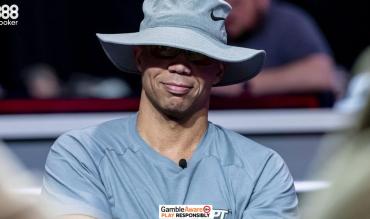
The 2000 WSOP $2,500 Pot-Limit Omaha final table was stacked with legends. Amarillo Slim, Devilfish, Hellmuth. Poker royalty everywhere you looked.
- And then there was Phil Ivey.
- 23 years old. No name.
- No reputation.
- Just a kid who'd somehow made it to the big stage.
Ivey fought his way to heads-up against Amarillo Slim, who had never lost a WSOP final table. To make matters worse, Ivey was down five-to-one in chips.
Slim was famous for his table talk, using folksy charm to unsettle opponents. Before the heads-up began, he told the crowd: "Very rarely do the sheep slaughter the butcher."
Ivey didn't bite. Didn't say a word and just played his cards.
One hour later, the sheep had all the chips.
Slim had been wrong on both counts. The butcher got slaughtered, and Phil Ivey was no sheep.
That night, a poker legend was born.
Ivey would go on to win eleven WSOP bracelets and become widely regarded as the best all-around player of his generation.
